Promotions · Nov. 17, 2026 · 7 min
Why Black Friday Deals Aren't Always the Lowest Price
Published Nov. 17, 2026
The short answer
- Signifyd, an e-commerce data company, found that only 31% of items sold on Black Friday 2024 hit their yearly low, as reported by Chain Store Age. We have not seen the full report.1
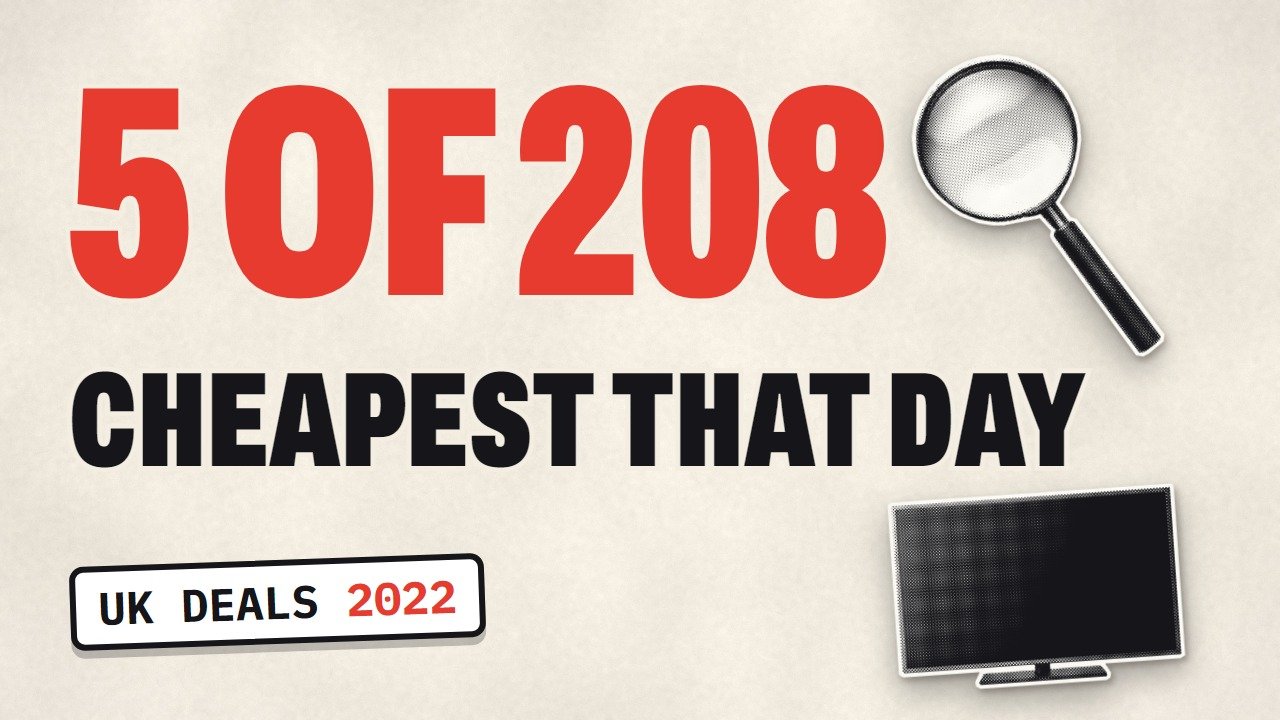
- Which?, a British consumer group, tracked 208 Black Friday deals every day for a year. Only five were cheapest on Black Friday itself, and 98% were the same price or cheaper at some point within those twelve months. Its retailers were British.3
- A discount tells you how far a price fell. It does not tell you where the floor is. The FTC's pricing guide says a "former price" must be the actual price, offered to the public regularly for a reasonably substantial period.7
00:00
Is Black Friday really the best price?
Signifyd tracked online sales across North America on Black Friday 2024 and found that 31% of items hit their yearly low. Most of what sold that day had been cheaper earlier in the year.1 The obvious answer to our question is yes. It is also incomplete.
Look at a price tag: a big number crossed out, a smaller one beside it. Ignore both and look at the tiny word in the corner, "was." It does a lot of work, and almost nobody reads it. Three numbers matter: the discount, the lowest price of the season and the lowest price of the year. They sound alike, but they are not.
00:58
Are the Black Friday discounts real?
Yes. Adobe analyzed more than a trillion visits to U.S. retail sites in 2024. At the peak, on Cyber Monday, electronics were about 30% off the listed price, toys about 26%, apparel about 23% and televisions about 22%.2 Signifyd saw it too: its average discount on Black Friday was about 29%.1
And some products really do bottom out right then. Consumer Reports, working with a price-data firm, followed appliance prices for a year. On average, the best refrigerator prices came on Black Friday, in 2016 data. The average refrigerator price fell by almost $250 between May and November, and a typical oven range moved about 14% between its February high and its November low.6 A cheaper TV is a cheaper TV.
But listen to how Adobe words it: 30% off the listed price. Adobe's release does not say how it sets that baseline, and a listed price is a different number from the lowest price a product has ever had.2
02:17
What does daily price tracking show?
To see the gap, you need someone who watched the price every day. A weekly snapshot misses a one-day drop; a daily record does not. Which?, a British consumer group, did exactly that: in 2022 it picked 208 Black Friday deals from eight retailers and checked each price daily for six months before the sale and six months after. Only five were cheapest on Black Friday itself, and 98% were the same price or cheaper at some point within those twelve months.3 When it ran the test again for the next sale, it found no deals at their cheapest of the year on the day itself.4
Those are British stores, and Which? is one source, so here is a U.S. version. Consumer Reports asked a price-tracking site, Decide.com, to follow online prices, looking at the lowest online price from reputable sellers from mid-November to mid-December. More than a quarter of the recommended TVs and cameras were at least 5% cheaper after Cyber Monday than earlier, with Black Friday weekend counted as earlier.5 That is old data, and only electronics, but it points the same way.
03:45
Is a discount the same as the lowest price?
Black Friday never promised the lowest price. It promised a discount. That sounds like a technicality, but a discount is measured from a starting point, and on the tag that starting point is the number next to "was." A discount tells you how far a price fell. It does not tell you where the floor is.
04:13
What does the FTC say a "was" price must be?
The FTC has pricing guides, and they cover "former price" claims. A former price has to be the actual price, offered to the public regularly, for a reasonably substantial period, in good faith.7
The guide even gives an example. A shop owner pays $5 for a pen and normally sells it for $7.50. He posts it at $10 for a few days, then advertises, "Were $10, now $7.50." The FTC's verdict on that ad: "obviously a false claim."7 The guide has a second warning: an ad saying "reduced to $9.99" from $10 is misleading, because the cut is too small to mean anything.7
That is guidance about how to compare prices. It is not a verdict on any store, and the pen is the FTC's hypothetical, not a real shop.
05:07
What is a doorbuster for?
A doorbuster is a big discount on one item, with only a few in stock. Economist Antonio Rosato built a model of this: a store discounts one product heavily but stocks little, and shoppers who miss out may buy a pricier substitute instead. In his paper, the discounted item is called the bargain, and the pricier substitute gets a much blunter label, which you can read in the paper's title in source 8.8 It is a theoretical model, not a measurement.
05:37
What do these sources not show?
They do not show that any store faked a price, or that Black Friday is a bad time to buy. And the numbers have limits. Signifyd's figure reached us through news coverage, and we have not seen its full method.1 Which? looked at British stores.34
So, is the "was" price real? Sometimes, and you cannot tell from the tag alone.
06:06
So, is Black Friday really the best price?
For some products, it sits right at the floor, such as refrigerators in that Consumer Reports data.6 For many others, the floor was somewhere else, and the tag will not tell you which.
Hold three numbers apart: the average discount, the lowest price of the season and the lowest price of the year. Adobe measured the first, the Consumer Reports analysis from 2010 looked at the second, and Signifyd and Which? went after the third.2513
06:44
What one check can you run before you buy?
Before you buy anything on sale, find the price history of that exact model, not the category. Find the lowest point on the chart, then ask one question: how far is today's price from it? That gap is the number the tag leaves out.
Back to the tag. "Was" sounds like a fact, but it is a claim: a past price that is supposed to be real, regular and held for a while. You can check the past.
Questions people ask
Which products really are cheapest on Black Friday?
Some are. In Consumer Reports data from 2016, the best refrigerator prices came on Black Friday on average, and the average refrigerator price fell by almost $250 between May and November. For many other products, Signifyd and Which? found the lowest price at another time of year.613
Does Adobe's 30% off figure mean the lowest price?
No. Adobe said electronics were about 30% off the listed price at the peak, on Cyber Monday 2024. Its release does not say how it sets that baseline, and a listed price is a different number from the lowest price a product has ever had.2
Which three numbers should you keep apart on a sale tag?
The average discount, the lowest price of the season and the lowest price of the year. Adobe measured the first. The Consumer Reports analysis looked at the second. Signifyd and Which? went after the third.2513
Do the Which? results apply in the United States?
Which? tracked British stores, so here is a U.S. version. Consumer Reports asked Decide.com to follow online prices, and more than a quarter of the recommended TVs and cameras were at least 5% cheaper after Cyber Monday than earlier. That is old data and covers only electronics, but it points the same way.35
Sources
Every source we used, with its link. The numbers in the article point here.
- Signifyd Black Friday 2024 dataSignifyd Ecommerce Holiday Season Pulse, Black Friday 2024, as reported by Chain Store Age, Dec. 2, 2024
- Adobe discount data, Cyber Monday 2024Adobe Analytics, Cyber Monday 2024 recap, Dec. 3, 2024
- Which? Black Friday tracking, 2023Which?, "Only 2% of discounted products are cheapest on Black Friday," Nov. 24, 2023
- Which? Black Friday tracking, 2025Which?, "Don't believe the hype: most Black Friday deals the same price or cheaper at other times of the year," Nov. 25, 2025
- Consumer Reports with Decide.com, 2011Consumer Reports with Decide.com, "Black Friday prices not always lowest for our recommended models," Nov. 16, 2011
- Consumer Reports appliance pricesConsumer Reports with Gap Intelligence, "When to Get the Best Deals on Kitchen Appliances," updated Oct. 19, 2018
- FTC guides on former pricesFederal Trade Commission, Guides Against Deceptive Pricing, 16 CFR 233.1, "Former price comparisons"
- Doorbuster model (theory)Antonio Rosato, "Selling substitute goods to loss-averse consumers: limited availability, bargains, and rip-offs," RAND Journal of Economics, 2016 (a theoretical model)
What this does and does not show
- The Signifyd figure is as reported by Chain Store Age; we have not seen the full report.
- The Which? studies cover UK retailers. The Consumer Reports and Decide.com analysis is old data and covers only electronics.
- The Rosato paper is a theoretical model, not a measurement. The FTC's pen example is a hypothetical, not a real store.
- This does not show that any store faked a price or that Black Friday is a bad time to buy.
Credits
DEAL DECODED is an educational channel about the design behind prices, stores and brands. Nothing here is financial advice.
Voice and visuals are produced with AI tools; scripts are researched and fact-checked against the sources listed on this page.
Music: a background track synthesized in code; no licensed tracks are used.