Stores · Dec. 18, 2026 · 7 min
Should You Buy the Extended Warranty?
Premieres Dec. 18, 2026 on YouTube
The short answer
- An extended warranty or service contract "costs extra and might cover different issues than a manufacturer's warranty," says the FTC.3
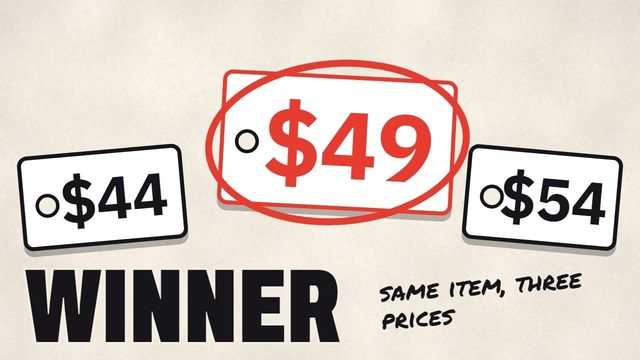
- In one study of TVs at one electronics retailer, a plan cost about 24 percent of the product's price. A model estimated that shoppers acted as if a 5 percent chance of failure were 13 percent.1
- None of this says every plan is a bad deal. Find out what the manufacturer's warranty already covers, decide before the offer, and read what the contract does not cover.34
00:00
How often does a TV really need a repair?
In a Consumer Reports survey cited in an economics study, the typical three-year repair rate for a TV brand was 5 percent.1
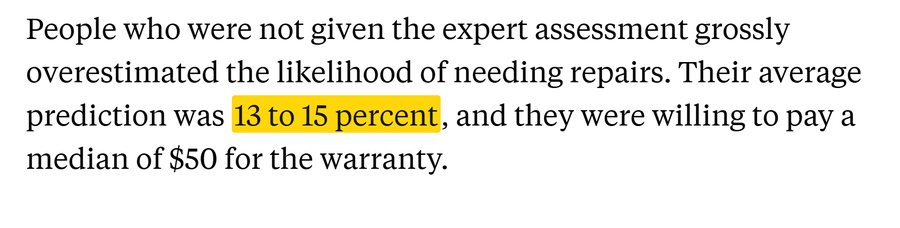
Now ask shoppers. When researchers asked how likely a new TV was to need a repair in those three years, the average answer was 13 to 15 percent.12
Hold that gap. It sits behind a question you will hear this month, with the TV already chosen: "Would you like to add the protection plan?"
We read the study, the FTC's advice, a state alert, and a retailer's annual report. By the end of this page you will know what that gap is worth, and who collects it. And keep three words in mind: "after you decide."
00:53
What is an extended warranty, and what does it cost?
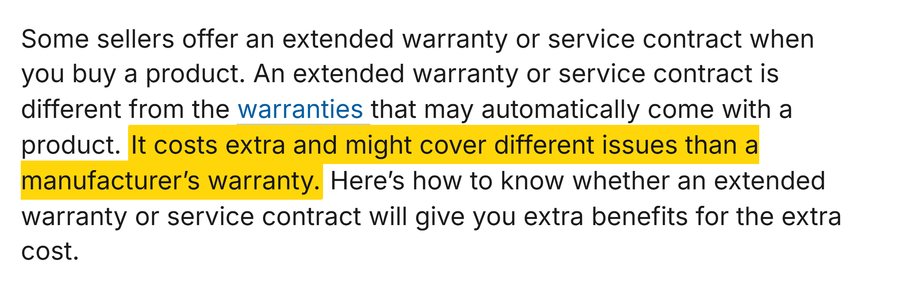
First, what is actually being sold. The FTC says an extended warranty or service contract "costs extra and might cover different issues than a manufacturer's warranty."3 New York's consumer protection division adds a point about the name: "a service contract is not a warranty."4
Now the price. The study used about 45,000 purchases at one large electronics retailer, from 1998 to 2004.1 A plan cost, on average, 24 percent of the product's price.12 About one in four TV buyers bought one.1
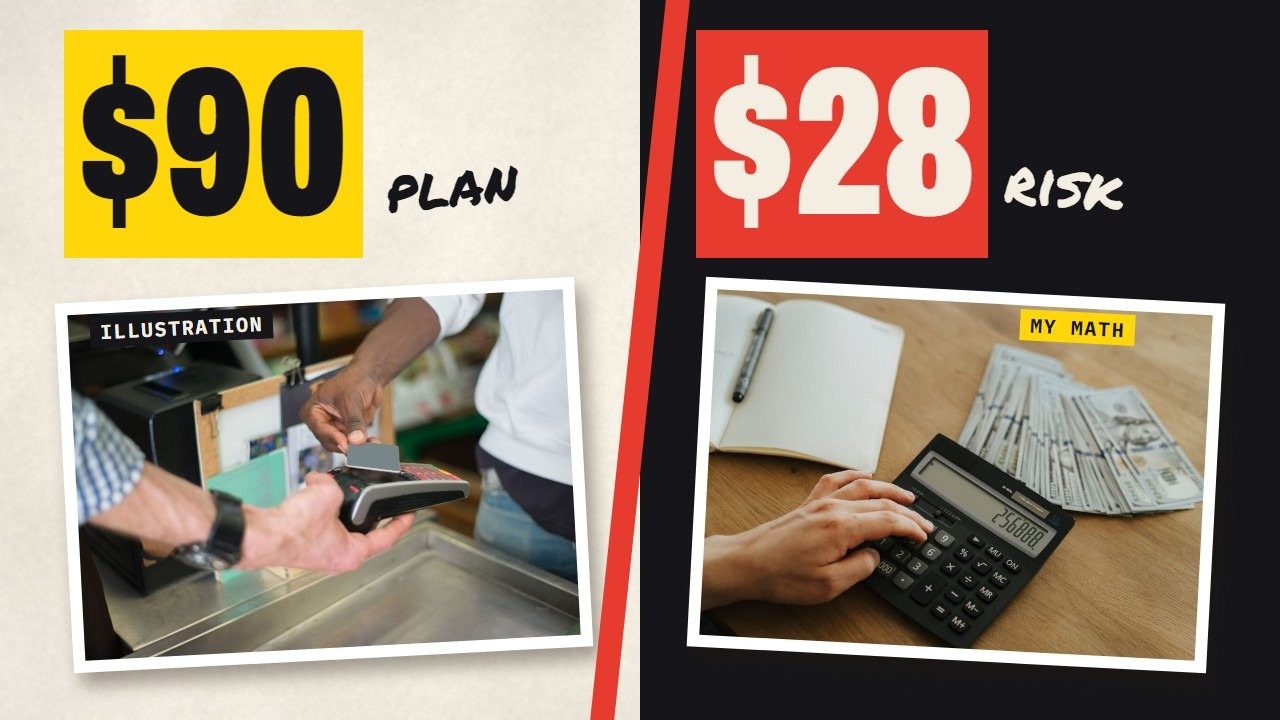
The average TV buyer paid $90 or more to insure against a loss of at most $400, with a 7 percent chance.1 Seven percent of $400 is $28. That is our arithmetic, not the study's: at most $28 of expected loss. So why pay $90 for a $28 risk?
Swipe sideways to read the full line.
01:58
Do shoppers guess wrong about how often a product breaks?
One answer is plain fear of a broken screen. The researchers tested another: a wrong guess about the odds.1
In an online experiment, about 1,000 people were asked to imagine buying a TV.12 Two groups were asked how likely it was to need a repair within three years. The averages: 13.5 percent, and 15.1
More than six in ten guessed at least double the real 5 percent. A third group was told first, by "an expert friend," that the chance was 5 percent.1
Then everyone was asked the most they would pay for a three-year plan. The two groups guessing: a median of $50. The group told the number: $25.12
That is one study, an imagined purchase, not money at a register. But the people who heard the real number said they would pay half.
Swipe sideways to read the full line.
02:57
What did the store data show about protection plans?
Is that just a lab effect? The researchers went back to the store data. Using a model, they estimated what shoppers behaved as if they believed.1
Their estimate: a 5 percent chance of failure is perceived as 13 percent. And plain dislike of risk? They call its role "insignificant."1
Two limits, said plainly. This is a model's estimate, not a reading of anyone's mind. And it is one retailer, from 1998 to 2004, with TVs making up about 11 percent of the data.1
One more detail from the same data. About 1 percent of purchases were made online. Online, shoppers took a plan about 4 percent of the time, one seventh of the in-store rate. The authors call that possible support for one idea: that in a store, as they put it, "the sales person has the buyer's attention."1
04:02
Is it the price or the volume that makes plans profitable?
Here is the twist. The authors used the same model to ask: what if shoppers knew the true odds?1
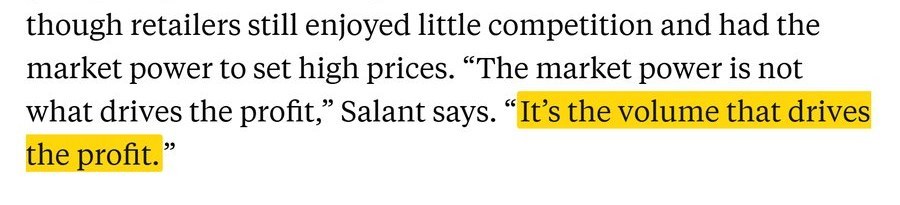
Plan volume and profit fall by more than 90 percent. The price and margin barely move: down 4 percent and 11 percent.12 So the engine is not the price. It is how many people say yes.
In the authors' words, demand and profits are driven by shoppers distorting the odds, "rather than standard risk aversion or sellers' market power."1 In their analysis, informing shoppers did more for shoppers than adding competition did.1
And the model puts the retailer's margin on a plan at about 46 percent. An estimate, not an accounting.1
Swipe sideways to read the full line.
04:55
Why is the protection plan offered right after you decide?
The authors write that the plan "is usually offered to consumers immediately after they finalize their decision to buy" the product.1 And they cite a British investigation from 2003: fewer than half of the people who bought a plan said they had planned to before walking in.1
Now the seller's side. A home-improvement chain's annual report, for the year ended January 30, 2026, shows $239 million in protection plan claim expenses, against $580 million of plan revenue recognized.5
That is about 41 cents per dollar, by our arithmetic. It is not profit; other costs sit elsewhere. And it is home goods, not TVs.5
Our limits. None of this says every plan is a bad deal. The study is about TVs, at one chain, more than 20 years ago, and we read its working paper version. We can't tell you what is right for your laptop, or your fridge. And we are not financial advisors.
06:08
What should you check before you buy an extended warranty?
Five things.
One. Find out what the manufacturer's warranty already covers. New York's advice: "Don't pay for a service contract for repairs that may be covered under an included warranty."4
Two. Decide before the offer. It comes after the decision, so make this choice while you are still in the aisle.1
Three. Ask for the written terms, and read what isn't covered. The FTC: "If it isn't listed in the contract, assume that it's not covered."3 One electronics retailer's published plan terms, a 2022 edition, allow a full refund within 30 days, less any service used. Check yours.7
Four. Check your card. Chase says some cards include an extended warranty benefit, generally an extra year or two, with limits and claim deadlines. Read your guide to benefits.6
Five. Do the math. Divide the plan's price by its years. The FTC says putting that money aside in a savings account may be a better option. Not financial advice. Just what the sources say.3

Swipe sideways to read the full line.
07:29
Who collects the gap between 5 percent and 13 percent?
Five percent is how often a TV needed a repair. Thirteen is how shoppers seemed to see it. In that study's model, the plan's profit lived in the gap.1
Questions people ask
What did people say they would pay when told the real odds?
In an online experiment, the two groups that guessed the odds gave a median of $50 for a three-year plan. The group told by "an expert friend" that the chance was 5 percent gave $25. It was an imagined purchase, not money at a register.12
Do online shoppers buy protection plans as often?
In the same store data, about 1 percent of purchases were made online. Online, shoppers took a plan about 4 percent of the time, one seventh of the in-store rate. The authors say this may support the idea that in a store "the sales person has the buyer's attention."1
How much did a home-improvement chain pay out on protection plans?
In the year ended January 30, 2026, its annual report shows $239 million in protection plan claim expenses against $580 million of plan revenue recognized. That is about 41 cents per dollar, by our arithmetic. It is not profit, and it is home goods, not TVs.5
Does your credit card already include an extended warranty?
Some do. Chase says some cards include an extended warranty benefit, generally an extra year or two, with limits and claim deadlines. Read your guide to benefits.6
Can you cancel a protection plan after you buy it?
One electronics retailer's published plan terms, a 2022 edition, allow a full refund within 30 days, less any service used. Check yours. We could not read the current edition of those terms.7
Sources
Every source we used, with its link. The numbers in the article point here.
- The economics study of extended warranties one studyAbito and Salant, "The Effect of Product Misperception on Economic Outcomes: Evidence from the Extended Warranty Market," Review of Economic Studies 86(6), 2019, pp. 2285 to 2318, doi:10.1093/restud/rdy045. We read the June 2018 working-paper version (44 pages)
- A university magazine's summary of the studyKellogg Insight, "No, Extended Warranties Are Usually Not Worth It," Oct. 3, 2019
- The FTC's advice on service contractsFTC, "Extended Warranties and Service Contracts," March 2023
- New York consumer alertNYS Department of State, Division of Consumer Protection, consumer alert, Dec. 20, 2022
- A home-improvement chain's annual reportLowe's Companies, Inc., Form 10-K, fiscal year ended Jan. 30, 2026
- Credit card extended warranty benefitsChase, "What is a credit card extended warranty, and how does it work?"
- An electronics retailer's plan termsAn electronics retailer's published protection-plan terms (PDF, May 2022 edition)
What this does and does not show
- We could not read the published 2019 version of the study; we read the 2018 working paper, whose abstract matches the published one.
- We could not read the Consumer Reports TV survey itself, the 2003 British investigation, or the current edition of the plan terms in source 7.
- The study covers TVs at one US electronics retailer from 1998 to 2004. Its figure of 5 percent seen as 13 percent and its 46 percent margin are estimates from a model.
- The experiment was an imagined purchase online. The $28 is our own arithmetic.
- The 10-K figures cover a home-improvement chain's own protection plans, not TVs, and are not profit.
- Pages were read on November 22, 2026 and can change. Some on-screen cards are recreated from the exact text of the pages we read.
- This is an explainer of published documents, not financial advice.
Credits
DEAL DECODED is an educational channel about the design behind prices, stores and brands. Voice and visuals are produced with AI tools; scripts are researched and fact-checked against the sources above.
Music: "Sleep Music No. 1" by Chris Haugen, "inner outer" by Lish Grooves, "Moonlight Magic" by Asher Fulero (YouTube Audio Library).