Stores · Dec. 15, 2026 · 8 min
Why Stores Let You Return Almost Anything
Premieres Dec. 15, 2026 on YouTube
The short answer
- Returns are big and planned for. An October 2025 industry survey says retailers expected 15.8 percent of annual sales, about $850 billion, to be returned. It is an estimate, not a count.12
- The laws we read, in California and New York, tell stores to post their return policy. They do not say what the policy has to be.1011
- A longer window does not only help you. In a review of 21 papers, giving customers more time to return an item reduced returns.13 That is one study.
00:00
Why would a store make it easy to undo a sale?
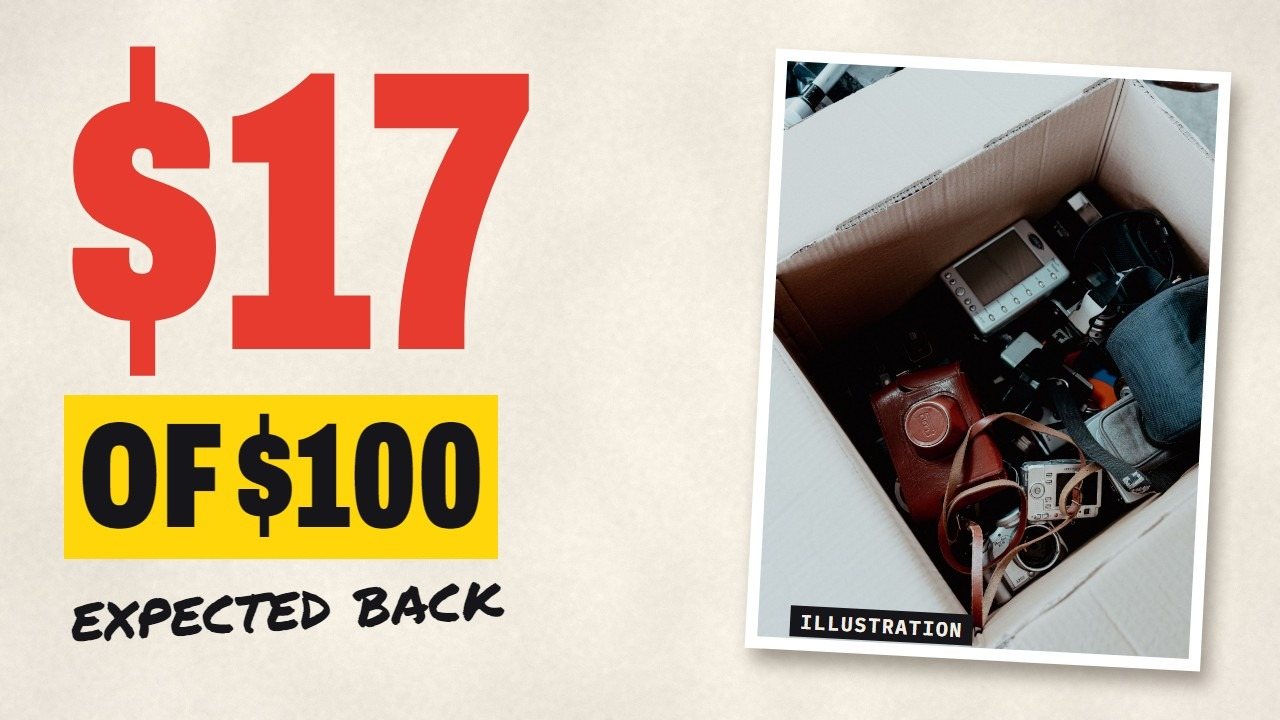
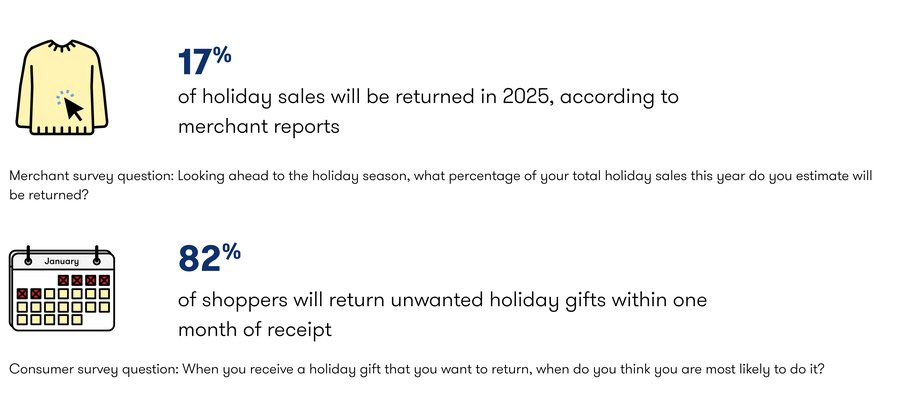
Last holiday season, retailers expected 17 out of every 100 dollars of holiday sales to come back.12
And this year, several big stores are giving you more time to return things.456 Why would a store make it easy to undo a sale?
We went to the documents: the stores' own return pages, a retailer's annual report, two state laws, and a study. By the end of this page you will know who that generosity is for, and what it costs. And keep one word in your head: "almost."
00:37
How big are holiday returns?
Start with the size of it. The National Retail Federation and a UPS company called Happy Returns publish a yearly report. The latest we found is from October 2025. Its estimate: retailers expected 15.8 percent of annual sales to be returned, about $850 billion.12
Notice the word "estimate." It comes from a survey of 358 e-commerce professionals at large merchants.1 It is what merchants told a survey, not a count of every box. For the holidays, the figure is 17 percent.12
Now look at an annual report. A footwear retailer's latest annual report says it reduces its sales by the returns it expects. For its last fiscal year, the figure was $435 million for "returns and allowances," on sales of $2.9 billion.3 Allowances include wholesale, so that is not a pure return rate.
But it shows something. A return is not a surprise to a store. By our reading, it is planned for, before you ever buy.
Swipe sideways to read the full line.
01:57
What are the holiday return windows, and where are they shorter?
Amazon's page says that for the 2026 holiday season, most items bought between November 1 and December 31 can be returned through January 31.4 Best Buy: purchases from October 30 through December 31, returnable through January 15.5 Apple: items received between November 6 and December 25, through January 8.7
Target counts differently. Purchases from November 1 through December 24, but the clock starts December 26. For electronics and entertainment items, that is 30 days from then, or January 24.6
Now read the exceptions. Target gives mobile phones 14 days from December 26.6 Best Buy: 14 days for devices that need activation.5 Walmart's page lists 14 days for most wireless phones, and 2 days for major appliances.8
That same Walmart page says: "You can bring back almost everything you buy."8 So the generosity has a shape, by our reading: long for most things, short for phones.
03:20
What does returning an item cost you?
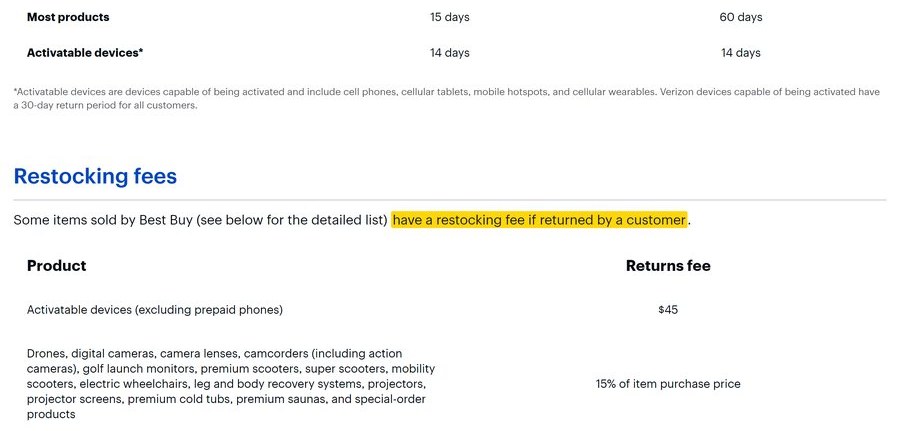
Best Buy lists restocking fees. $45 on devices that need activation. 15 percent of the price on drones, cameras, lenses, camcorders, projectors, and more. None if the item is unopened, and none in eight states it names.5
Amazon's page has fees too. Miss the "return by date," and it may charge 20 percent of the item's price. Return something damaged or missing parts: up to 50 percent. Opened video games and board games: 100 percent. And it adds: "Should customers abuse this service, we may adjust its availability."4
Why charge? In the retailers' survey, the top reasons were processing costs and carrier shipping, 40 percent each. And retailers that track it estimate about 9 percent of returns are fraudulent.1
NPR reported in 2022 that experts estimate retailers throw away about a quarter of returns. An estimate, not a count.15
Swipe sideways to read the full line.
04:43
Does the law make a store take things back?
California's attorney general writes: "When a store clearly displays a limited or no-refund policy, however, refunds and exchanges are not required by law."9
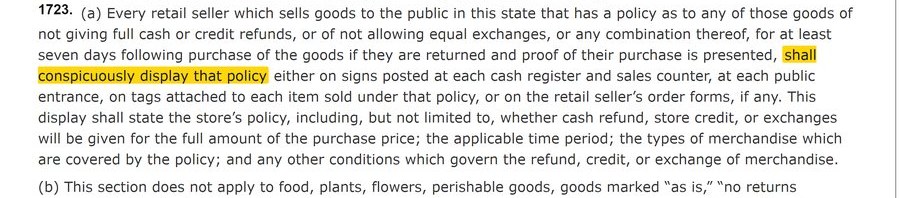
The law, Civil Code section 1723, is about display. A store with a policy of no full refund for at least seven days must post it at the register, at the entrance, or on tags. If it doesn't, it owes you the purchase price when you return the item within 30 days.10
New York's General Business Law is similar, and covers online stores: post the policy, restocking fees included, or owe a refund or credit within 30 days for unused items.11
Then there is the federal rule people name for changing your mind: the FTC's Cooling-Off Rule. Three days. But the FTC says it does not cover sales made entirely online, or at the seller's permanent place of business.12
So the laws we read say: tell people your policy. They do not say what the policy has to be.
Swipe sideways to read the full line.
05:56
Why do stores want you to have more time to return things?
So the store writes the policy. Now, why make it generous?
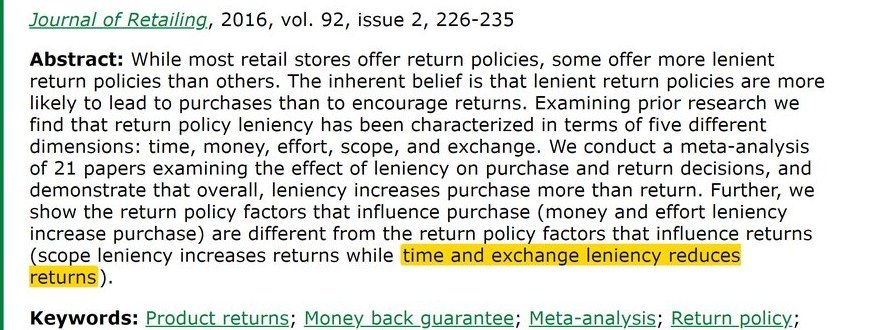
Here is the twist. A longer window does not only help you. Researchers combined 21 papers, published in the Journal of Retailing in 2016. Their finding: giving customers more time to return an item reduced returns. Not raised them.13
The same study found easier refunds and less hassle raised purchases.13 And in the retail federation's survey, 37 percent of retailers said they plan to extend return windows to manage holiday returns.1
One of the authors suggested a reason: the endowment effect. The longer you keep something, the harder it is to give back.14
Our limits. None of the store pages says why it picked its dates. We read the study's abstract and a university summary, not the full paper, and its authors said online shopping needs more research.1314 We read two states' laws, not 50. And we read these pages on November 22. Stores can change them.
Swipe sideways to read the full line.
07:10
What should you check before you buy a gift?
Five things.
One. Read the exceptions on the item's page. Amazon says to check it before you order. On the pages we read, phones have the shortest windows.4568
Two. Keep proof of purchase. Best Buy says returns without it may be store credit, and may be denied or limited.5
Three. Keep the box and everything in it. Best Buy says missing accessories can mean a denied return or a deduction. Amazon lists damage fees up to 50 percent.45
Four. Write the date down. Amazon's late fee starts after its "return by date." Target's clock starts December 26.46
Five. If you can't find a posted policy, check your state. California and New York each say 30 days. Not legal advice.91011
08:12
What does "almost" mean in "return almost anything"?
Stores let you return almost anything. The store decides what "almost" means. So read that part first.8
Questions people ask
Does the Cooling-Off Rule cover online purchases?
No. The FTC's Cooling-Off Rule gives three days, but the FTC says it does not cover sales made entirely online, or at the seller's permanent place of business.12
How much returned merchandise do stores throw away?
NPR reported in 2022 that experts estimate retailers throw away about a quarter of returns. That is an estimate, not a count.15
How long do you have to return a phone?
Less time than for most items. Target gives mobile phones 14 days from December 26. Best Buy lists 14 days for devices that need activation. Walmart's page lists 14 days for most wireless phones.658
What is the endowment effect in returns?
One of the study's authors suggested that the longer you keep something, the harder it is to give back. That is the endowment effect. It is one researcher's suggestion for why a longer window reduced returns.14
Sources
Every source we used, with its link. The numbers in the article point here.
- The NRF press release on returnsNRF, "Consumers Expected to Return Nearly $850 Billion in Merchandise in 2025," Oct. 15, 2025
- The NRF and Happy Returns reportNRF and Happy Returns, "2025 Retail Returns Landscape" (PDF)
- A footwear retailer's annual reportDesigner Brands Inc., Form 10-K, fiscal year ended Jan. 31, 2026
- Amazon's return policyAmazon, Return Policy
- Best Buy's return policyBest Buy, Return & Exchange Policy
- Target's holiday return policyTarget, "2026 Holiday Shopping at Target: What You Need to Know"
- Apple's returns and refundsApple, Returns & Refunds
- Walmart's free returnsWalmart, Free Returns
- California Attorney General on refund policiesCalifornia Attorney General, "Refund Policies"
- California Civil Code section 1723California Civil Code section 1723
- New York General Business Law 218-aNew York General Business Law section 218-a, "Disclosure of refund policies"
- The FTC's Cooling-Off RuleFTC, "Buyer's Remorse: The FTC's Cooling-Off Rule May Help"
- The meta-analysis of 21 papersJanakiraman, Syrdal and Freling, "The Effect of Return Policy Leniency on Consumer Purchase and Return Decisions: A Meta-analytic Review," Journal of Retailing 92(2), 2016 (abstract)
- University summary of the studyUniversity of Texas at Dallas, "Researchers Examine Effect of Return Policies on Consumer Behavior," Jan. 19, 2016
- NPR on what happens to returnsNPR, Alina Selyukh, "From living rooms to landfills, some holiday shopping returns take a 'very sad path,'" Jan. 12, 2022
What this does and does not show
- We could not read the 2026 edition of the NRF and Happy Returns report, so we use October 2025.
- We read the abstract of the 2016 study and a university summary, not the full paper.
- We could not read other stores' general return pages or the laws of the other 48 states.
- The store pages were read on November 22, 2026 and can change.
- The annual report's figure covers returns and allowances, so it is not a pure return rate.
- Some on-screen cards are recreated from the exact text of the pages we read.
- This is an explainer of published documents, not legal advice.
Credits
DEAL DECODED is an educational channel about the design behind prices, stores and brands. Voice and visuals are produced with AI tools; scripts are researched and fact-checked against the sources above.
Music: "Snowfall" by Asher Fulero, "Fascination" by Gregory Allison, "High Class" by Benjamin Andrews (YouTube Audio Library).